The Existential Threat and the Climate Opportunity
July 21, 2026

Tucson’s affordable housing depends on approximately 200,000 homes built between World War II and the late 1970s. These houses are generally structurally sound, but many still contain original sewer lines,
plumbing, electrical systems, roofs, and ducts that are reaching the end of their useful lives. They were never seriously insulated, so they leak like sieves.
Twenty years ago, I conducted a county-funded assessment of Tucson’s older housing stock. The study found that about one in seven homes had a serious failure in a major household system. These failures occurred regardless of income, but only the highest-income homeowners could typically afford to repair one major problem before the next occurred. Today, those same homes are twenty years older, and we still know surprisingly little about the condition of the hidden infrastructure inside them.
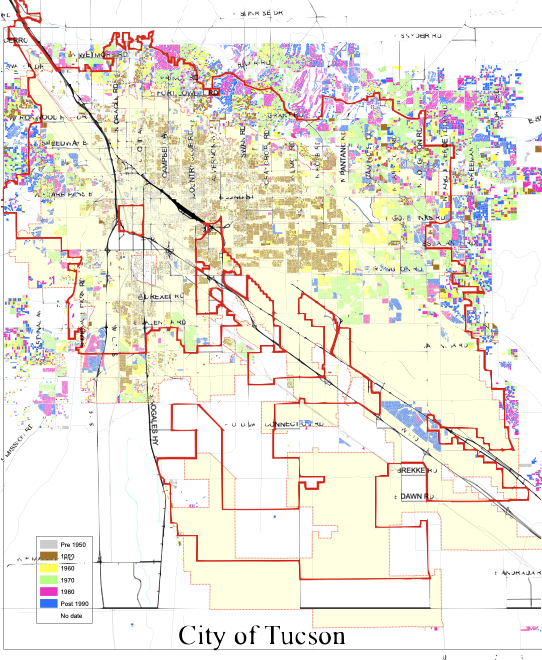
IF YOUR HOUSE IN IN AN AREA THAT IS COLORED GRAY/BROWN/YELLOW/GREEN your sewer is currently leaking.
The challenge is larger than housing. It threatens neighborhood stability, affordability, and Tucson’s local economy. The obstacles are significant: an aging construction workforce, a shortage of trained rehabilitation workers and no place to train the, limited financing options for major repairs, and few programs focused specifically on preserving older homes.
Green Retrofit II (GRII) was created to address one of the most critical barriers: workforce development. Tucson needs thousands of workers trained specifically to repair and upgrade older homes. Unlike new construction, rehabilitation work requires skills in diagnosis, repair, energy upgrades, and working with aging systems.
The good news is that the City already operates federally funded home repair programs for lower-income homeowners. These projects could become “teaching houses” where trainees learn by working alongside experienced contractors on real repairs. Students would learn safety, regulations, diagnostic skills, and historic construction techniques in the classroom at Pima Community College, then apply those skills on actual homes under professional supervision. Every project would produce two outcomes: a repaired home and newly trained workers.
Pima Community College is prepared to develop the micro-certificates and training pathways needed to support this effort. Local contractors are being interviewed to identify workforce shortages, needed skills, and opportunities for partnership. What is needed now is City participation to help transform existing home repair projects into the training platform Tucson desperately needs.
More than 50 million post-WWII homes across the United States face similar challenges. Tucson has an opportunity to become a national leader by creating a model that simultaneously preserves affordable housing, develops a skilled workforce, and improves the energy performance and resilience of older neighborhoods.
You can help. Contact the Mayor and your City Council member and urge them to support a partnership between the City’s Housing and Community Development Department and Pima Community College to develop the workforce needed to preserve Tucson’s aging housing stock. The homes are already here. The repair needs are already here. The question is whether we will build the workforce needed to meet the challenge.
Map of all single-family homes in metro Tucson, color coded by the decade of construction. 60% of the City of Tucson’s houses were built before 1980.
Where do you live?