Categories
Event

Early Arizona Politics and the Central Arizona Project

Tuesday, June 9
6:00-7:15 pm
Zoom: <https://us02web.zoom.us/j/85177149862?pwd=5KWZOZvkblSoTU6JBmujVp98fOq4Jb.1>

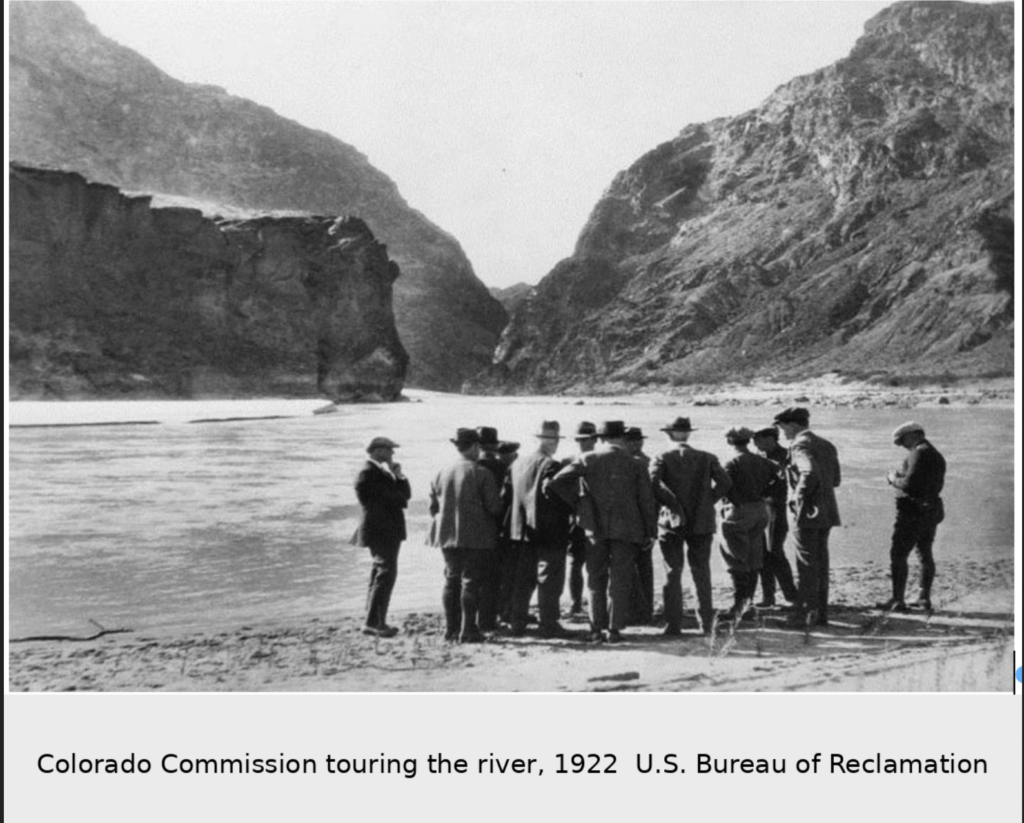
Decisions made long ago structure the contemporary debates among the Colorado Basin states today.  This presentation explores early politics internal to Arizona to explain some of our current situation. Despite benefiting from early federal investments in dam building and “reclamation,” between 1923 and 1944, business interests in the state of Arizona opposed approval of the 1922 Colorado Compact governing use of the Colorado River and saw California as their enemy.

Concerns about the adequacy of flows began even before the Compact, but became a most unwelcome discussion in the 1940s when the state’s leaders acquiesced to the federal government’s terms in order to fund plans for the Central Arizona Project.  

Knowing early history helps explain why our state took so long to receive and utilize its full share of Colorado River water, and why users of the Central Arizona Project are so vulnerable to shortages on the river.  This presentation will conclude with some information about Arizona’s recent strategies for dealing with shortages.

SPEAKER
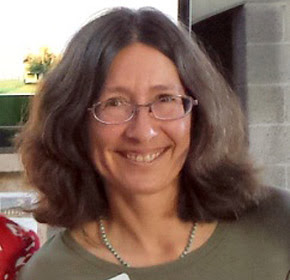
Julia Fonseca is a hydrologist, now consulting as Madrean Resources. While at Pima County Regional Flood Control District, she was the project manager for various recharge feasibility studies in the Tucson area, which culminated in the Lower Santa Cruz Replenishment

Project for CAP recharge and the Marana High Plains effluent recharge project. Later, she helped to develop County programs for riparian protection and restoration, and compliance with the Clean Water Act and Endangered Species Act.  She is currently writing a book about George Edson Philip Smith, Tucson’s first home-grown hydrologist.
Categories
Meeting

Free Speech, Right Speech, and the Protection of Our Planet

Tuesday, May 12, 6:00 pm

It would be hard to identify an issue more pressing than the preservation of our precious planet. To complicate things, there is a gnawing sense that we are running out of time and the task is now impossible. The First Amendment gives us wide berth to advocate for the survival of life on Earth. But is anger-fueled or sensational speech skillful and effective? What do our spiritual traditions, including Buddhism, have to say about “right speech”? And how might its tenets be employed to help us protect the planet — and keep our sanity? This talk by David Bodney aims to shed some light on these issues.

Our Speaker:
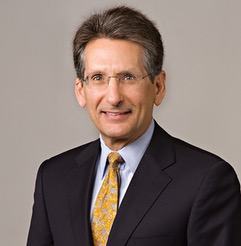
David J. Bodney serves as Senior Counsel at Ballard Spahr LLP, where he practices media and constitutional law, and teaches media law as a Professor of Practice at the College of Law

at UA. A graduate of Yale College (B.A., ’76) and the University of Virginia (J.D./M.A., Foreign Affairs, ’79), he served as a legislative aide to Sen. John V. Tunney (D – CA) and began his legal practice at Brown & Bain (now Perkins Coie) in Phoenix.

He served as editor and general counsel to New Times (1990-92), spent 22 years developing an international media law practice at Steptoe & Johnson LLP, and founded the Media and Entertainment Law Group at Ballard Spahr in 2014. David was drawn to Arizona in substantial part to practice Indian law, and he has represented one tribe on a wide array of issues, including natural resources and water law, for over 30 years, a relationship that began through his partnership at Steptoe with Bruce Babbitt. His professional bio can be found at www.ballardspahr.com. In 2020, David moved to Tucson, where he continues to practice and teach—a move that has allowed him to deepen his 50-year practice of Zen Buddhism through Upaya Tucson, an affiliate of the Upaya Zen Center of Santa Fe, New Mexico.