Tuesday, February 10, 6:00 pm
We are fast approaching a special election to decide on RTA Next. People on all sides of the dual-proposition initiative have compelling points to make about our current transportation system in Tucson and Pima County.
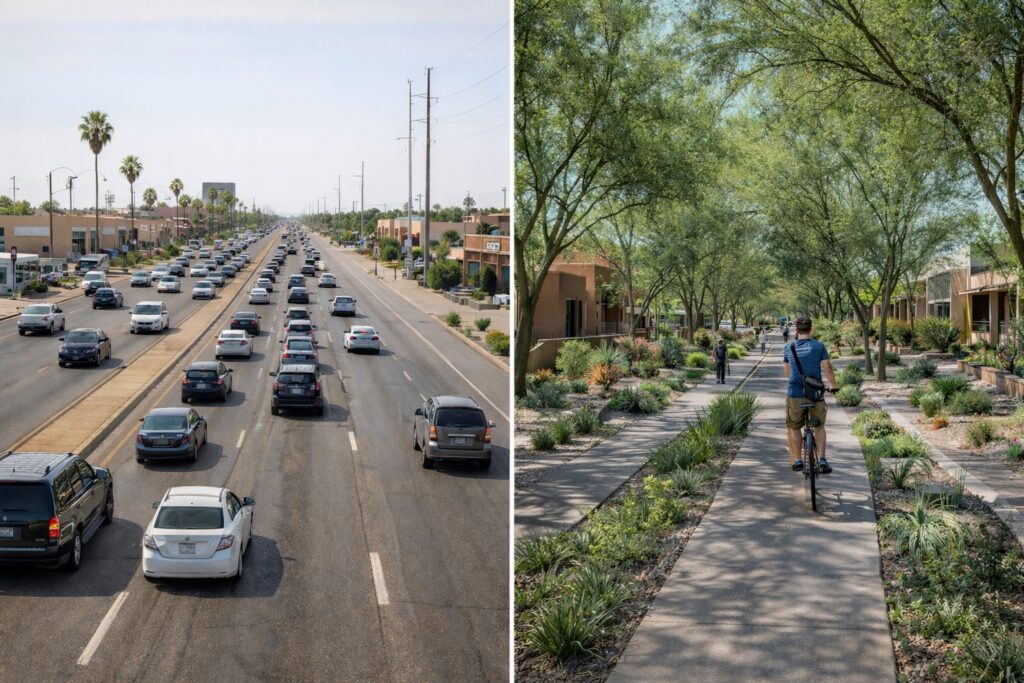
The challenge is not so much about moving people faster, it’s about reducing the distance people must travel. Visionaries in and out of planning departments are reframing mobility around convenience, safety, and neighborhood-scale access rather than continued roadway expansion.
Consider: 84% of all trips in the Metro area are by car; Tucson drivers log over 8 billion miles annually. This is travel we cannot afford to maintain, given that most city and county roads are in poor condition with a $2–3 billion repair backlog.
Local plans (Move Tucson, RTA 2045, Pima County) share emerging themes: prioritize safety, equity, and multimodal options; design from the sidewalk inward; and recognize that widening roads cannot solve congestion. All seem to agree that ultimately our financial constraints and the urgency of carbon drawdown require a shift from auto-dependence to greener forms of mobility.
Join us for an animated discussion of how RTA Next might fit into, and/or postpone, the sustainable future of mobility in southern Arizona.
Our panel will include Logan Havens, board member of the Living Streets Alliance, leaders in the Complete Streets Initiative passed by Mayor & Council in February 2019 and advisors to the City’s climate action plan.